

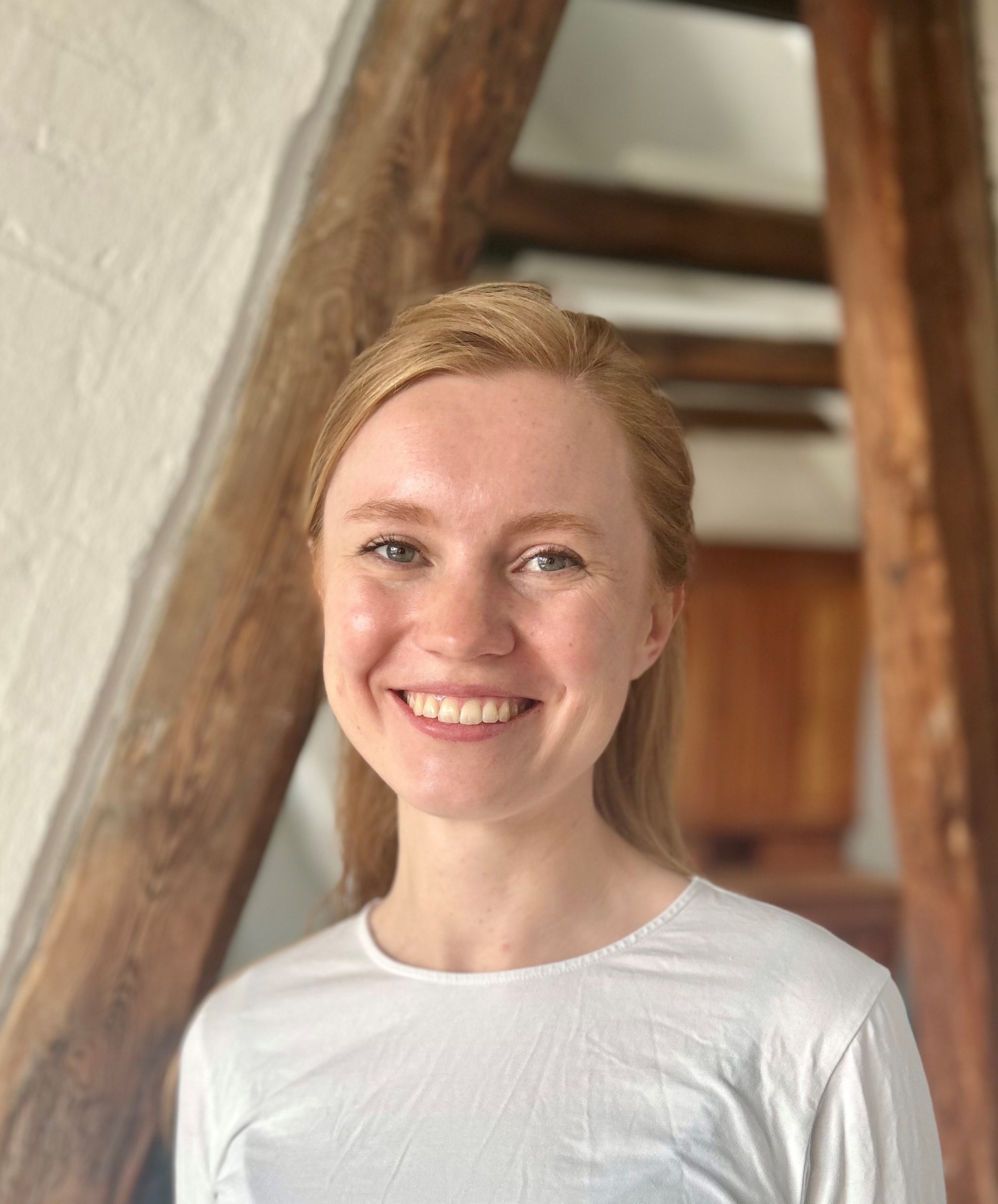
Mathilde Marie Hansen comes into the NAD PhD programme with experience from both clinical and basic research – and was led into the world of neuroscience by music.
Mathilde Marie Hansen’s initial interest in neuroscience originated in music. As a practicing musician, Mathilde found herself wondering why music affects us the way it does and how we perceive it, leading her to develop a deeper interest in the brain.
After completing her bachelor’s degree in Medicine, a master’s programme in Neuroscience was established at the University of Copenhagen, and Mathilde gave up her studies in Medicine to pursue her interest in neuroscience.
But Mathilde was not quite done with medicine. After finishing the courses of the master’s programme in Neuroscience, Mathilde went back to school and completed her medical degree to be better prepared for conducting human research. Recently, Mathilde has completed a hybrid internship at Sapienza University in Rome in parallel with her basic clinical training (KBU) where she investigated sound generation and rhythmicity in manatees.
In addition to this recent internship, Mathilde has done assisting work on a number of research projects during her studies. As such, Mathilde comes into the NAD PhD programme with a combination of basic neuroscience knowledge, research experience and a clinical, patient-focused outlook.
Mathilde’s research interests are similarly quite wide-ranging and span different fields:
“I have identified the Neurodevelopment research column as my primary column of interest. I think there are so many interesting things going on developmentally in the brain, with language development being one example of this,” Mathilde explains.
During the pre-PhD year, Mathilde wants to challenge herself by diving into some of the many exciting opportunities the Danish neuroscience community offers:
“I think the programme is really well put together, with many interesting labs participating, and I would love to visit many of them. I appreciate that you can visit different groups and see how they work and how you could fit into that. I also appreciate that the translational perspective is emphasised – I think you can learn from both the clinical and the pre-clinical field and especially from how they interact and overlap,” Mathilde reflects.